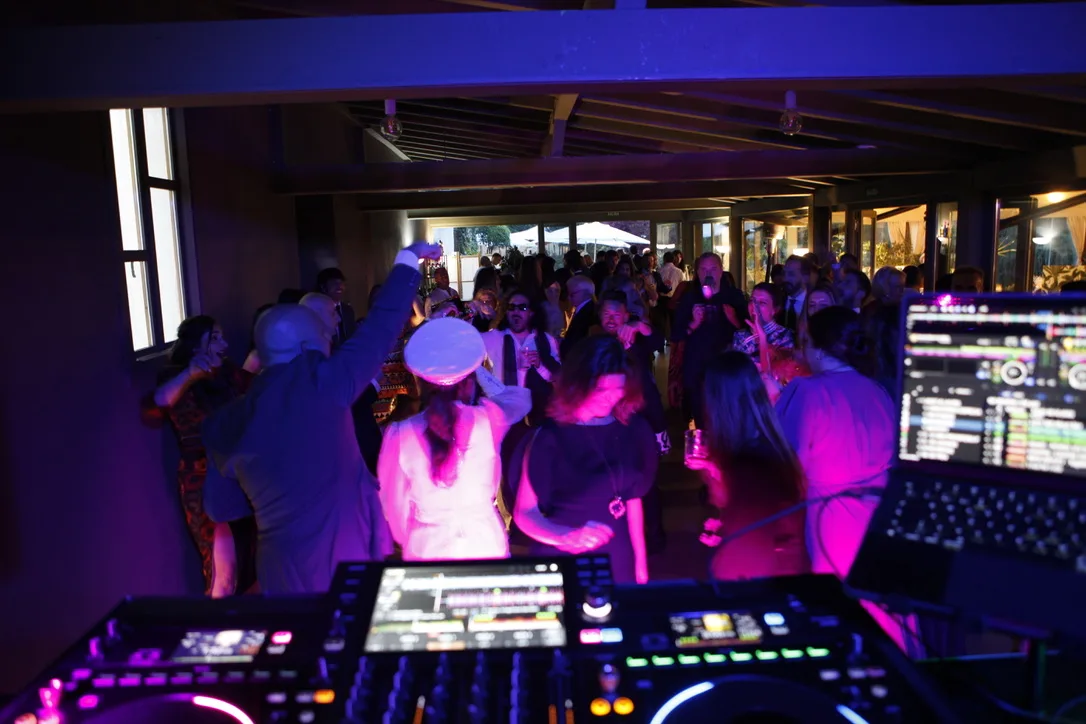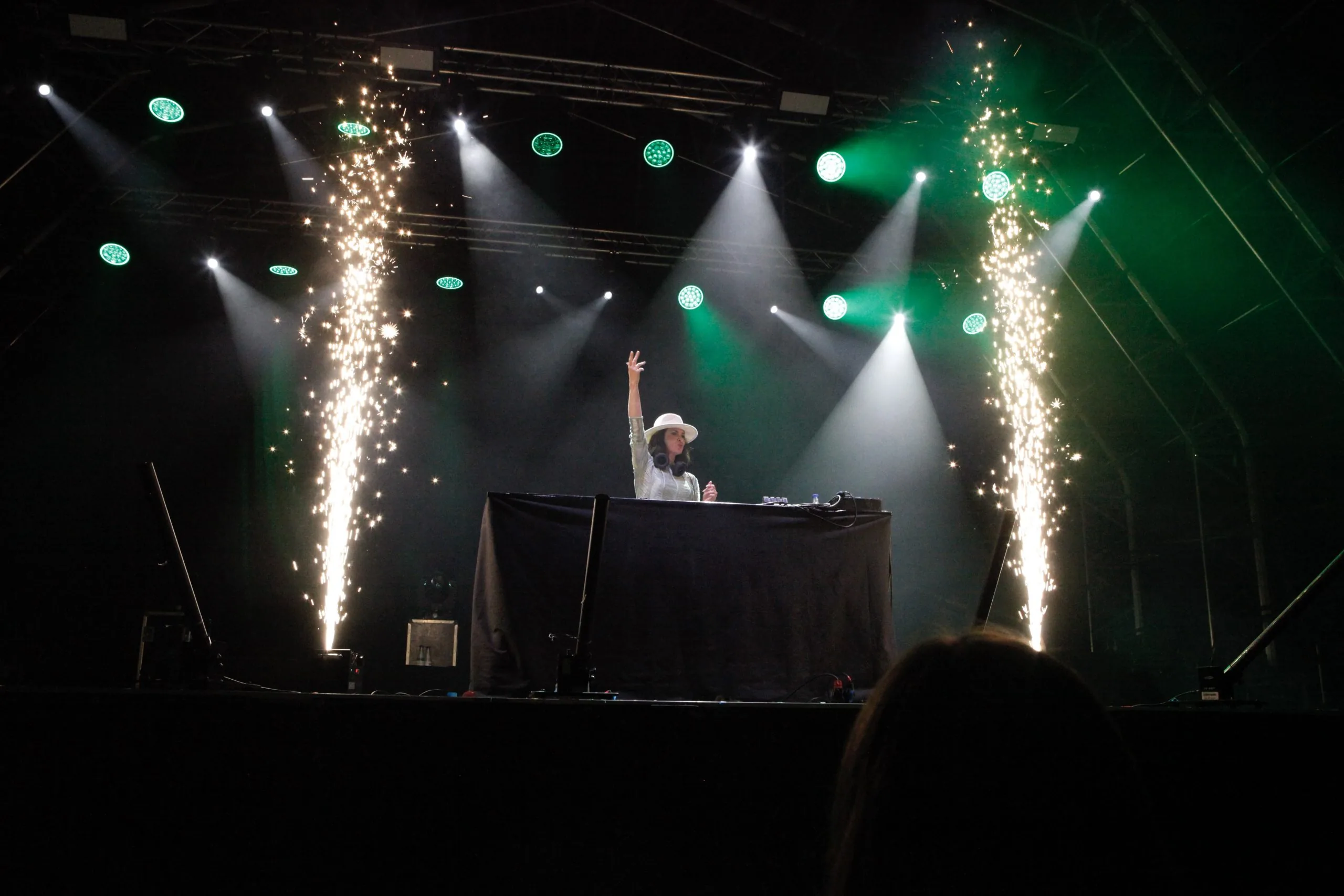

When couples ask me “how many speakers do we need?”, the question that matters is almost always a different one. Where is the wedding?
It changes things. Not a little — everything. The same session, with the same musical judgement and the same rig, sounds and works in completely different ways depending on whether we are at an open-air finca in the sierra, the country estates in the mountains north of Madrid, at a hacienda with low ceilings and stone walls, in a marquee put up in the gardens, or at a palacete in the centre of town. And that, which looks like a technical detail, has direct consequences for how the party feels to the people dancing it.
So when I talk to couples in Madrid about their wedding, the first thing I want to know is not the song list. It is the space.
The open-air finca and the volume trap
Weddings at fincas and haciendas around Madrid generate more technical questions than any other kind. And the most common one always points in the wrong direction. “Will there be enough volume?”
Volume outdoors is not the problem. Dispersion is. In an open space the sound scatters in every direction. If the system is not set up properly, the people in the middle of the floor hear it fine, but anyone fifteen metres away, or at the far end of the garden, never quite hooks into the music. The room splits before anyone notices. And once the room is split, the energy does not rise however good the track is.
The answer is not pushing the fader up. It is designing the system for that particular space, with the coverage the dancefloor needs, mid-field fill so the sound arrives evenly, and audio management so it does not spill outwards and bother the people who are not dancing. That is work done beforehand, before the wedding. Not something improvised on the night.
There is another factor people forget. Wind. Outdoors, a gust can completely change how the room perceives the sound. A DJ with no outdoor experience notices when it is already too late. I account for it in advance.
The indoor space with character, the historic hacienda
Stone, vaults, high ceilings, tiled floors. The historic venues around Madrid have a very pronounced acoustic personality. And that personality, if you do not work with it, works against you.
A long reverb tail makes transitions sound dirty and strips the definition out of the music. Two bars in and the sound is already eating itself. At a wedding, where the session has to stay clean for hours, that turns into listening fatigue for the people dancing. They feel it even if they cannot say why.
What I do in spaces like this is adapt the mixing approach. Cleaner transitions, fewer simultaneous layers, genres that do not lean on the bass to carry the energy. There are repertoires that sound perfect in a long-reverb room. There are others that become a problem. Knowing which in advance is part of the job.
The marquee, the most technical space of all
Marquees look simple and are not. They are temporary enclosed structures, put up specifically for the wedding, with acoustics that depend on the material, the size and whether there is any treated surface inside. A badly chosen marquee can boom like a drum. A well-designed one can sound very good.
The usual problem at marquee weddings around Madrid is heat, which affects the equipment if you have not planned for it, and the lack of insulation from outside, which sometimes means working within level limits that have to be agreed with the venue. I know those limits. I work inside them without the room noticing.
The city palacete or the hotel, controlled space and high expectations
At weddings in hotels or urban palaces in central Madrid — palacetes, the grand townhouses now used as event venues — the space is usually well treated acoustically. Ceiling height is reasonable, the surfaces absorb, the in-house sound system has been running for years. The challenge here is not technical.
These spaces have rules. Curfews on the dancing, decibel limits, protocols with the venue’s own team. At a finca on the outskirts there is more room to move. In a five-star hotel in the centre, less. That is not a problem if you know it in advance and plan it with the couple. It is a problem if it catches you out at two in the morning with the party at its best.
I always coordinate with the venue team before the wedding. Not so that everything is the same, but so that everything goes the way it was planned.
What does not change with the space
The musical judgement. Reading the room. The work done with you beforehand to understand what kind of night you want. That is the same at a finca in the sierra as at a palacete in the centre.
What changes is how it gets executed. The rig I bring, where I position it, which genres serve that acoustic best, how I shape the arc of the session for the space. If you want to understand how I work on repertoire with couples before the wedding, I go into it in detail in the post on how to build a setlist that sounds like you.
The result I am after is always the same. The floor does not drop, the big moments hold, the party works from start to finish. The route there depends on the space.
If you are looking for a wedding DJ in Madrid and you already have the venue booked, tell me about it. It is the first question I would ask you anyway. You can see the full service at DJ for weddings and, whenever you like, write to me here to talk about your wedding.
Frequently asked questions
Do I need different sound equipment for an outdoor wedding than for an indoor one?
Generally, yes. Open-air weddings at fincas in the sierra or around Madrid need a system with wider coverage and, often, mid-field fill so the sound arrives evenly across the whole dance area. Indoors, the design depends on the acoustics of the particular space. I bring my own rig, sized for each type of event.
How do the acoustics of a stone finca or a historic hacienda affect the music?
Spaces with a lot of natural reverb, such as haciendas or vaulted chapels, build the sound up in a way that can dirty the transitions and tire the people dancing. You work around it by adapting the mix, choosing genres that hold up in that environment and positioning the rig to reduce awkward reflections.
What happens if the wedding is in a marquee and it is very hot?
That is something to plan for, not to solve on the spot. Heat affects both the electronics and the way sound is perceived. For summer marquee weddings in Madrid, I arrive with enough time for the equipment to be running in the conditions of the space and checked before the party starts.
Do you coordinate with the finca or hotel team?
Always. Before every wedding I speak to whoever runs the space to go through access, setup times and any restrictions on sound level or timings. Doing that avoids surprises on the night. It is part of the process, not an extra.
Can you work at fincas or venues you have not been to before?
Yes. Preparing each space from scratch is part of how I work. I study the venue, ask what I need to know and arrive with the logistics settled. Whether I know it beforehand or not, the result has to be the same.