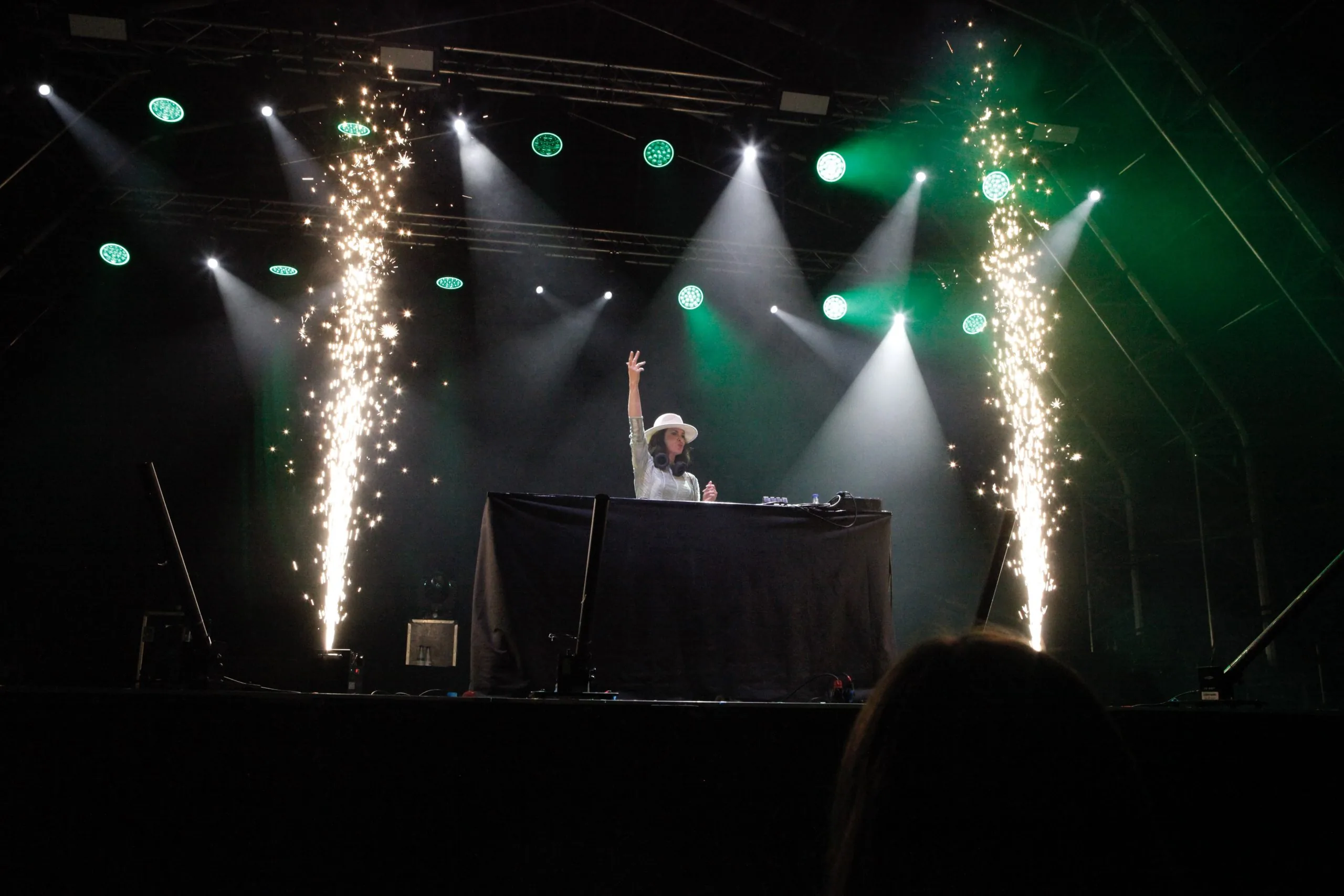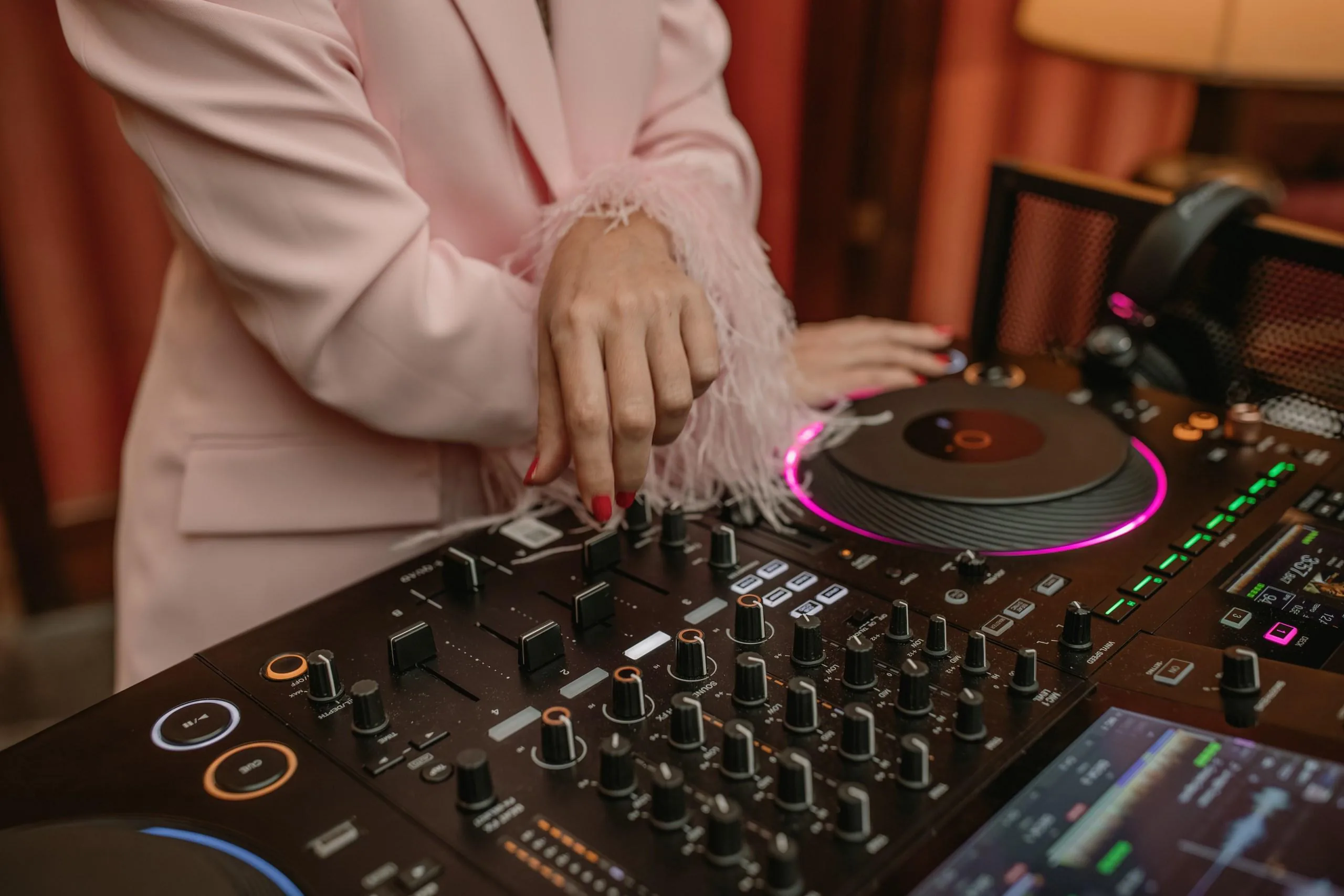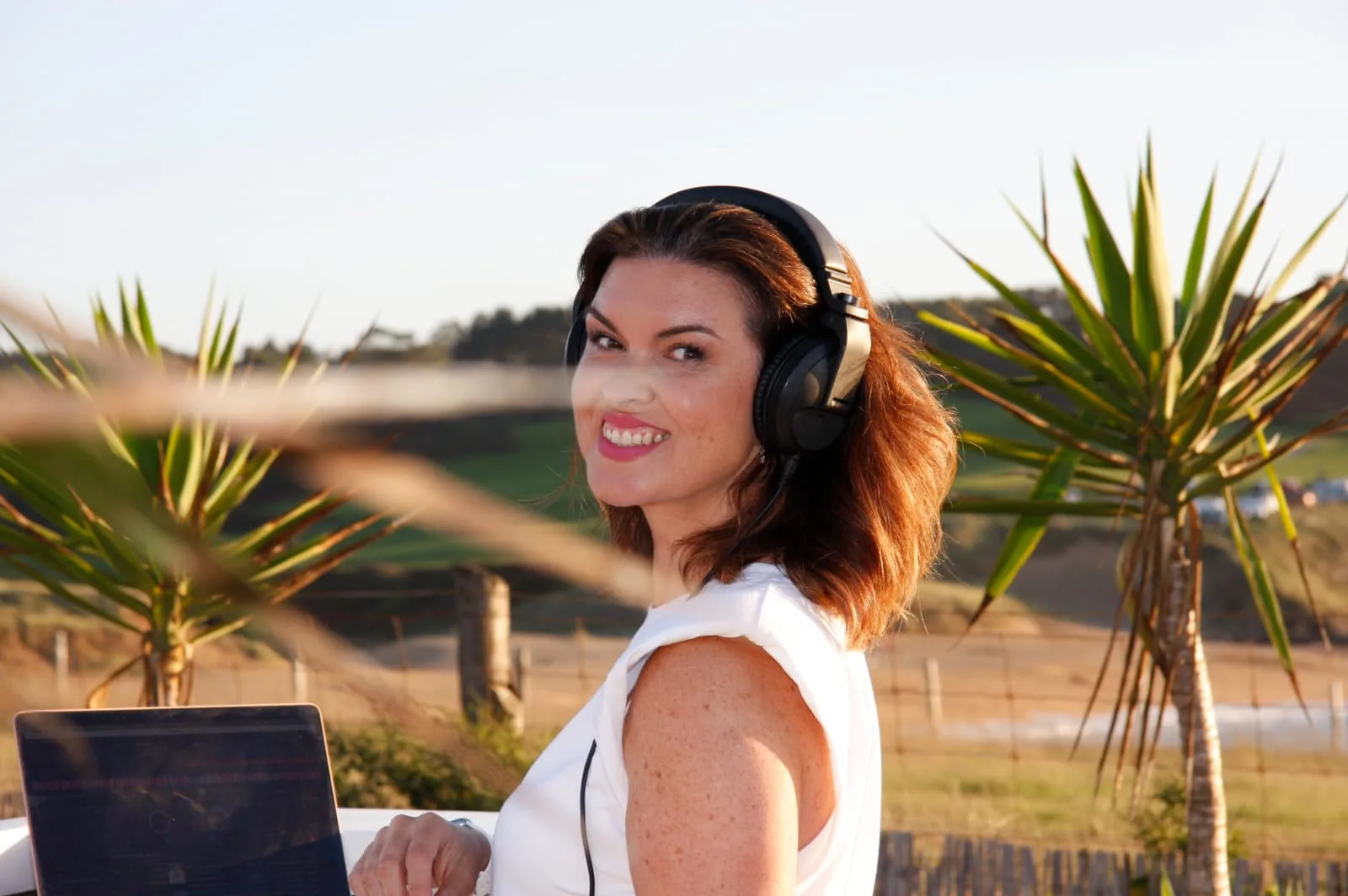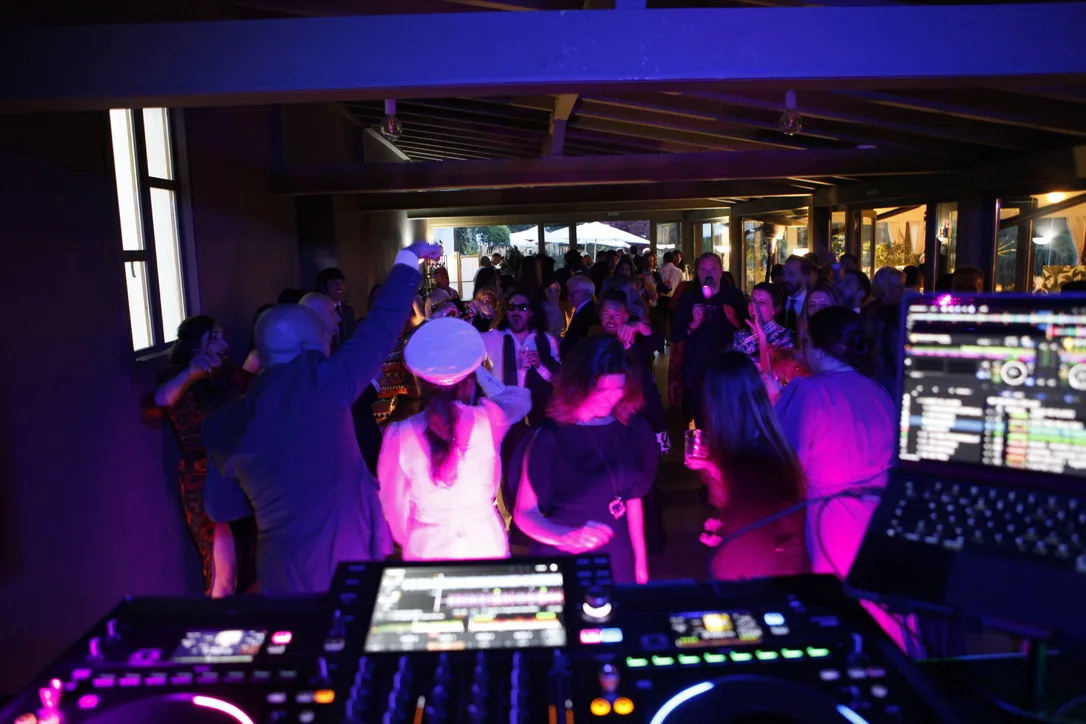
If last year’s dinner ended with an empty dancefloor until half past one, the music was partly to blame, but not entirely. The underlying reason is more awkward and more simple. At a company party nobody chose to be there. People came because their team was going, because it would look bad not to, because the company is paying. And dancing in front of your boss carries a social cost that doesn’t exist at a wedding.
A better repertoire doesn’t fix that. You work alongside it. What the music can do is avoid making it worse, and that’s where most of the nights I’ve seen are lost. The session starts too early and too high, the room can’t hold that energy yet, the floor sits empty with four brave souls in the middle, and from then on nobody dares walk in. Recovering a room that has seen an empty dancefloor takes forty minutes. Sometimes it doesn’t come back.
I’ve been playing for ten years. Weddings above all, and a lot of December dinners. I don’t do entertainment, I don’t bring karaoke or a photo booth. I mix live and I read the room. And in a corporate room there are things I look at before I turn up a single decibel.
Nobody here chose to come, and that changes everything
At a wedding, the guests have been looking forward to that night for months. They know the couple’s story, they know half the room, they came to celebrate something specific. When I play the first dance track, people are already on their feet.
At a company party the starting point is another one. There are people from three departments who don’t speak to each other, there’s someone who drove and isn’t drinking, there’s an intern of two months sitting next to the finance director. There’s someone who’s been working since nine in the morning and came straight to dinner. The room isn’t one group, it’s six small groups sharing a tablecloth.
And there’s a hierarchy still firmly in place even though nobody’s wearing a name badge. Nobody dances in front of their boss until someone further up the ladder dances first. I’ve seen this so many times that I now take it as read when I plan the night. The floor opens from the top down, almost never the other way round. If the board is sitting at the back table with their coffee, the staff aren’t going to get up. And if the board stands up at half twelve and goes home, the floor fills at twelve thirty-five. I have literally timed that change.
Knowing this isn’t a complaint. It’s information I work with. It means the first part of the night isn’t there to fill the floor, it’s there to prepare the ground.
Why the dancefloor empties for the same reason almost every time
The typical scene. Desserts are finished. Someone from the organising team comes over and tells me we can get the party going now. It’s twenty past eleven, the waiting staff are clearing plates, half the room is still sitting with coffee and two tables are still on the cake.
If I play a dancefloor track at that moment, at dancefloor volume, what happens is predictable. Nobody gets up. Five minutes later nobody has got up. The people who were having a conversation now have to raise their voices, and some of them decide it’s a good time to step outside for a cigarette. I’ve turned a full room that was talking into a half-empty room that’s annoyed. And the party hasn’t even started.
The other version of the same mistake is starting too high. Dropping the biggest track of the night at half eleven because there’s a rush to liven things up. That track is spent. When the room is finally ready to dance at one, I no longer have that shot. And people, without knowing why, feel the party is going downhill.
The start isn’t decided by the clock on the running order. It’s decided by looking at the room. I look at three things. How many people are still sitting, where the board is, and whether the waiting staff have finished serving. While there’s still service going on, there’s no party. There’s noise.
The first forty minutes decide the whole night
Those forty minutes are the worst planned and the ones that change the outcome most. They’re not a formality before the good part. They are the good part, done another way.
What I do in that stretch is hold up the conversation rather than compete with it. Recognisable music with no ego to it, at a volume where two people can talk without leaning into each other’s faces. The room has to notice that the register has changed since dinner, without anyone feeling pushed towards the floor.
The energy climbs in small steps. A slightly more rhythmic track. Then another. People start getting up for drinks, moving between tables, walking around the room. That movement is the signal I’m waiting for. When there are more people standing than sitting, the floor can open, because whoever walks on isn’t going to be alone in the middle of an empty lot.
That moment doesn’t arrive at the time printed on the running order. At some dinners it comes at quarter to twelve. At others, with long speeches and an awards handout in the middle, it doesn’t come until one. Watching the clock instead of the room is the fastest way to spoil a night that was going well.
What the music can do and what the company has to do
I’m going to be straight about who does what, because this is the conversation I have with almost every organiser who writes to me.
What I can do: choose the real starting moment, build the climb without burning tracks, read which group in the room is moving and pull from there, come down when things cool off instead of pushing, and hold the ending so the last hour isn’t a slow decline.
What I can’t do, and this is where the company decides more than it thinks:
- The lighting. A function room with the main lights at full has no dancefloor, it has a dining room. If the lights can’t be dimmed, the party will cost twice the effort. Ask the venue about this before signing, not on the night.
- The tables. If nobody clears them, people stay sitting. It’s that mechanical. Clearing the area in front of the booth and leaving high tables around it is enough, so the people who aren’t dancing have somewhere to be without going back to their chair.
- The bar. A bar set up at the far end of the room splits the space in two and leaves the dancefloor as decoration. Put it near the dancing and people stay with their drink where the music is.
- The speeches. All together, and before the dancing starts. A thank-you from the managing director at quarter to one, with the floor already warm, kills the night and forces me to start from zero.
- The board. Get someone senior to come near the floor in the first twenty minutes. They don’t have to dance well or dance much. They have to be seen. That’s the permission everyone else is waiting for.
When I talk to a company before the event, these five things take up more time than the music. And they’re usually free.
The repertoire isn’t the problem, the running order is
Almost every list a company sends me is reasonable. Well-known tracks, something from the eighties, something current, the sales director’s request. The problem is rarely which songs are on it. It’s what order they go in and what minute each one comes in.
A workforce with very different ages isn’t sorted by alternating one from the nineties and one from now. That produces a night in fits and starts, where each group dances for ten minutes and sits down for another ten. It’s sorted in blocks, with transitions that carry you from one territory to the next without the change of decade being obvious. That’s where mixing live matters. Not for show, but because a hard cut between two tracks is the perfect excuse to go back to the table.
And there are tracks that work differently at a company party than at a wedding. Songs that call for a choreography or demand explicit participation put people in the position of making fools of themselves in front of colleagues they’ll see on Monday. At a wedding that doesn’t matter. Here it does. The room’s real fear isn’t being bored, it’s being shown up. The whole session is built around that.
If you’re organising the annual dinner or party and you want to see how I work these formats, I go through it on corporate events. For smaller, more private celebrations, anniversaries or small team parties, there’s private events in Asturias. And if you’re interested in the kind of questions I ask before taking on a booking, the criteria are the same ones I apply with couples and I explained them in what I ask couples before accepting a wedding.
What companies ask me before booking
The time the dancing starts isn’t a time, it’s a signal, and I’ve already described it. When service has finished and there are more people standing than sitting, the room is ready. If that happens at quarter to twelve, I start then. If the speeches run long and it comes at one, I start at one.
If nobody senior is up for it, the job still gets done, but the floor takes longer and it starts somewhere else, usually with the youngest group or with the team that knows each other best. That’s why I ask beforehand. Twenty minutes of a senior presence near the dancing saves an hour of cold room, and it isn’t a question of being friendly, it’s a question of permission.
On a tight budget, a playlist is fine for the atmosphere during dinner, no problem at all. What a playlist can’t do is decide the moment to start, stretch a block because the floor is responding, or cut a climb that’s cooling off. Those three decisions are made by looking at the room, and they’re exactly the ones that separate a party that holds up from one that fades at one in the morning.
What I need to know before the event is specific. How many people there are and roughly what ages, whether there are speeches or awards and when, what time dinner service finishes, whether the room’s lights can be dimmed, where the bar will be and how late we have a sound permit. With that I prepare the night. The rest is decided there, with the room in front of me.