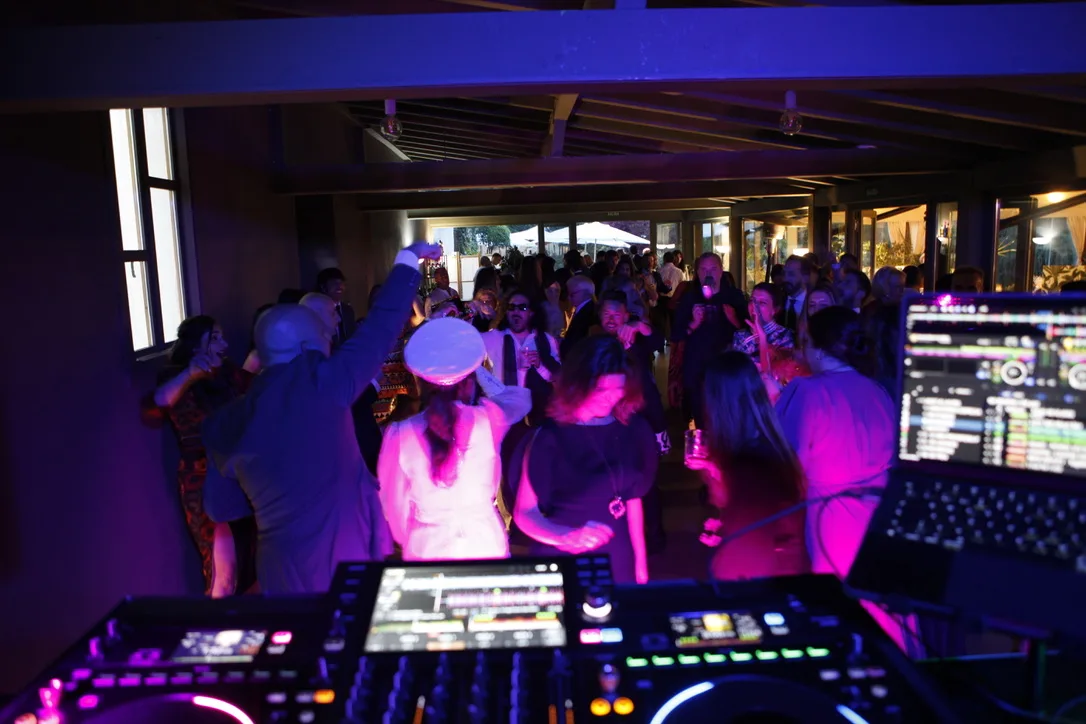
There are two kinds of wedding. In one, the floor fills up and doesn’t empty all night. In the other, people sit down after twenty minutes and never get back up.
The difference is almost never in the catering, or the bar, or the time the dancing starts. It’s in the music. And more specifically, in how the setlist playing that night was built.
If you’ve landed on this post it’s probably because you already know all this. You’ve been to weddings where the music had nothing to do with the couple. Weddings where the list could have belonged to anyone. And you don’t want that for yours.
Good. Let’s talk about how to do the opposite.
Why your wedding sounds like the rest even when you don’t want it to
There’s a pattern that repeats. The couple has their own musical taste — they listen to soul, indie, electronic, whatever — but when the moment comes to speak to the DJ, the conversation shrinks to three or four generic questions. And that’s where everything is lost.
The problem with the favourite-songs form
Most DJs work with a template. They send you a document with three fields: songs you want, songs you don’t, opening song. Three boxes to sum up your musical taste.
That’s not personalising. That’s filling in.
The form always produces the same result: a setlist that sounds like the sum of what each form says, not like the specific couple who filled it in. Because the ten songs you put there are the tip of the iceberg. Underneath there’s a much bigger, much more specific, much harder-to-translate taste that doesn’t fit into three fields.
Why “play whatever you want” is the worst thing you can tell a DJ
At the other extreme is the couple who says “I trust you, play whatever you think”. It sounds generous, but in practice it means: “I have no way to communicate my taste, so play what always works.”
And what always works is what plays at every wedding. That’s the problem. If you want the full frame on why I defend a wedding that sounds like you, I lay it out in the manifesto.
What it really means to personalise a wedding setlist
Personalising isn’t making a song list. Personalising is understanding how you listen to music and translating that into a session that makes sense on a dance floor at two in the morning.
Those are two different things, and both are hard.
Personalising isn’t making a song list
A song list isn’t a setlist. A setlist is a built session — with an arc, with transitions, with a reading of the room at every moment. A list is a Spotify file. A setlist is work.
When someone sells you a “personalised playlist”, what they’re almost always selling is the first thing, not the second. Asking the DJ for ten favourite songs to slot in somewhere during the night isn’t personalisation. It’s a formality.
The difference between declared taste and real taste
This is important.
Declared taste is what you say when someone asks what music you like. “We listen to indie.” “We like soul.” “We’re into electronic.” They’re labels. Useful, but generic.
Real taste is something else. It’s which specific song gives you a physical reaction when it plays in the car. What track you can’t not dance to if someone plays it in a bar. What record you’ve worn out. What artist made you cry at a concert once.
I work with the second, not the first. Because the first fits in a form. The second only comes out through conversation.
The process I use to extract your real musical taste
Here I stop talking in the abstract and explain how I do it. Because this isn’t theory — it’s the concrete process I use to build the setlist of every wedding I play.
The first conversation
Before any document, there’s a conversation. An hour, calm, no rush. I don’t send you a form with three fields. I ask. If you want to see exactly the questions I ask couples before accepting a wedding, they’re detailed there.
What do you listen to when you drive? What plays at home when you cook? What was the last concert you went to and why? Is there an artist that marked a period of your life? What song do you know by heart even though you’d rather not admit it?
Those don’t feel like work questions. They feel like conversation. But in that hour, things come out that would never come out in a form.
How you met and what song played in the background
This is the question I care about most. Not because the answer will literally go into the setlist — sometimes yes, sometimes no — but because it opens a door.
The music that kept you company when you were getting to know each other isn’t incidental. It’s part of how you remember that period. And there’s a very specific energy in those tracks that, well placed, makes you look at each other for a second in the middle of the dance floor and get goosebumps. That look is what a wedding is after. This same conversation is also the starting point for crafting the first-dance song.
What you don’t want to hear, and why that matters as much as what you do
People underestimate this part. We think a setlist is built by adding songs, but half the work is subtracting.
If you don’t want reggaeton, I need to know. If commercial music hurts you, same. If there’s a specific song that was played at another wedding and burnt you out, I want it on the blacklist. Because a setlist is defined as much by what plays as by what never will.
And there’s more: knowing what you don’t want gives me information about your musical identity. Someone who rules out all commercial Latin music but wants bossa nova is telling me very different things to someone who rules out indie but wants soul. Two different weddings.
How I refine your list without betraying it
When you send me a list of must-play tracks, my job isn’t to play them all. My job is to understand why they’re there.
Sometimes a song you love doesn’t work on the floor at that hour. Sometimes there’s another version of the same track that fits better in the session’s arc. Sometimes a specific track won’t play whole, but I’ll thread it into another in a transition that respects the song and pushes the floor. That’s refining without betraying.
What I will never do is play a song you asked for at a moment when I know it’ll break the room. That isn’t serving you — that’s saying yes and leaving the party empty.
If you want to hear how all this sounds in practice, there are some tracks in the music style section. There you can see what sonic families I work with and how I combine them.
How I translate that into a coherent session
I have your conversation, I have your list, I have what you’re ruling out. Now comes the part you can’t do with an algorithm.
The session isn’t a puzzle of songs
A well-built setlist isn’t “song one, song two, song three”. It’s a curve. There’s an opening that invites, a rise that’s earned, a peak that’s sustained, a breath that lets the room breathe and a close that leaves people wanting more.
That arc doesn’t come from stringing favourites together. It comes from reading the room in real time and deciding what the floor needs at each moment. What works at midnight isn’t what works at two. And what works with thirty people dancing isn’t the same as with one hundred and twenty.
Why the order matters more than the individual songs
Two weddings with exactly the same fifty songs can be two different weddings. The one with the right order works. The other doesn’t. Simple as that.
Order is everything a form can’t capture. That’s why the right question isn’t “which songs do I want?” but “what kind of night do I want?”. From there you build.
Genres that blend well when you wouldn’t think so
Part of the work is putting together things that in theory don’t go together. Disco and melodic techno. Soul and latin groove. Indie and 90s. Afro house and funk. When the transition is right, the room doesn’t notice the change — they only feel that the energy doesn’t drop.
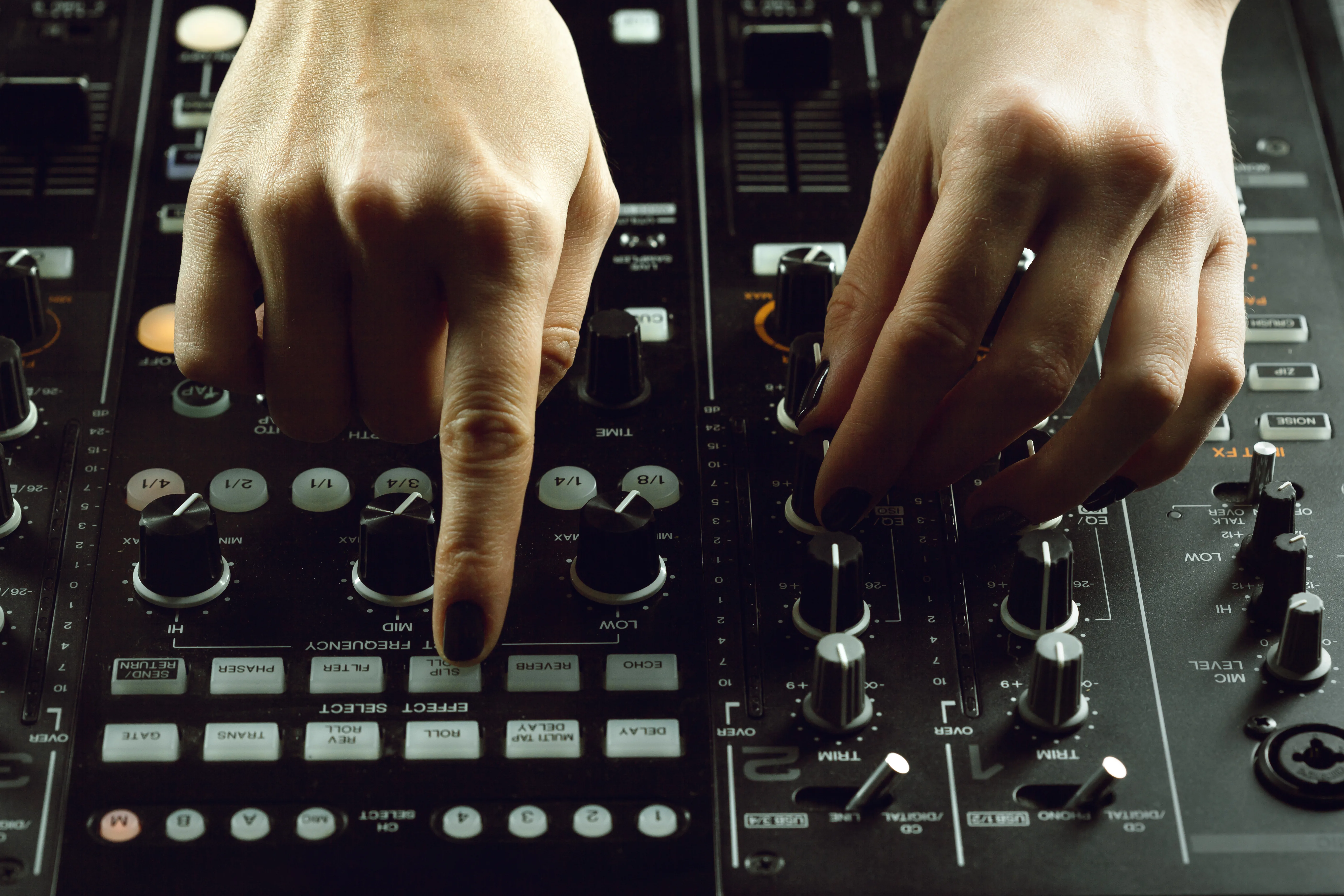
This only happens mixing live. No automated playlists, no press play and pray. Every transition is built with the floor in front of me, deciding in that very second where the night goes next.
What happens when the setlist is aligned with you
There’s a concrete moment at weddings that go well. The couple is on the floor, a track we talked about three months earlier in the first conversation comes in, they look at each other, and they realise that song is playing because that conversation existed. Not because they asked for it. Because someone was listening.
That moment is what I’m after. Not the group karaoke or the big summer anthem. That small second of recognition. When you build it right, the party holds itself up for hours.
Questions you ask yourselves before talking to a DJ
Can I request songs that aren’t danceable?
Yes, with caveats. Real taste rules, but so does the floor’s context. What I do is find the right version or the right moment for each thing. Some songs don’t work at two in the morning but do during dinner or the cocktail. Others that aren’t obviously danceable, placed well in a transition, become one of the peaks of the night. There are no fixed rules — there’s taste.
What if my guests want different music to ours?
The party is yours, but the guests are part of the room. The setlist has to work for both, and that can be done without betraying your taste. Usually you don’t need to play what your guests would request — it’s enough to read the room, identify what energy it needs at each moment, and serve it with tracks you also recognise as yours. If your wedding sounds like you, guests will notice and appreciate it.
How do you keep the setlist from feeling forced?
Coherence comes from mixing live, not from juxtaposing songs. A well-built transition makes a soul track and a melodic techno track sound like they always belonged together. If the DJ mixes well, nobody stops to think “weird change”. They just keep dancing.
How far in advance should we talk about the music?
Ideally two or three months ahead for the background conversation, and a final review in the weeks before. There’s no fixed deadline, but the earlier we start, the more room I have to fine-tune and for the setlist to mature.
Do you cover the whole event or just the party?
I cover ceremony, cocktail and party with independent rigs. Each moment has its own musical logic — what works at the ceremony isn’t what works at two a.m., and treating it all as the same session is one of the most common mistakes.
If you recognise yourselves in any of this
The first conversation comes without commitment. You tell me what your wedding is like, what you listen to, what you don’t want to hear — and we’ll see if it makes sense to work together.
You can write to me here.