There is a stretch of the Madrid map where some of the most discerning wedding profiles in the region are concentrated: Pozuelo de Alarcón, Majadahonda, Las Rozas, Boadilla del Monte, Aravaca. Weddings at high-end fincas and haciendas, with careful logistics, clear protocols and a type of guest accustomed to well-executed events. An area where the music cannot sound like filler.
I work across Madrid and the wider region, and the western corridor has specific characteristics that are worth knowing if you are organising a wedding there. It does not call for a different DJ: it calls for the same criteria with more information about the context.
The type of wedding that predominates in west Madrid
Weddings in this area tend to share certain constants. Large guest lists — between one hundred and two hundred — with a broad age spread. Families with a homogeneous social background who have attended many weddings before and have formed opinions about what they like and what they do not. Couples who do not improvise: they have been planning for months, have confirmed every supplier well in advance and arrive on the night with the script well rehearsed.
From a musical standpoint, that means something clear: the margin for error is small. Not because the guests are more demanding, but because they are more observant. If the transition between the cocktail and dinner is not resolved well, if the first hour of the party loses energy, or if the musical criteria lack coherence, it shows earlier than it would in other settings.
That level of expectation is part of why I enjoy working in this area. It forces you to prepare each night in greater detail.
Venues and haciendas: what they impose on acoustics and logistics
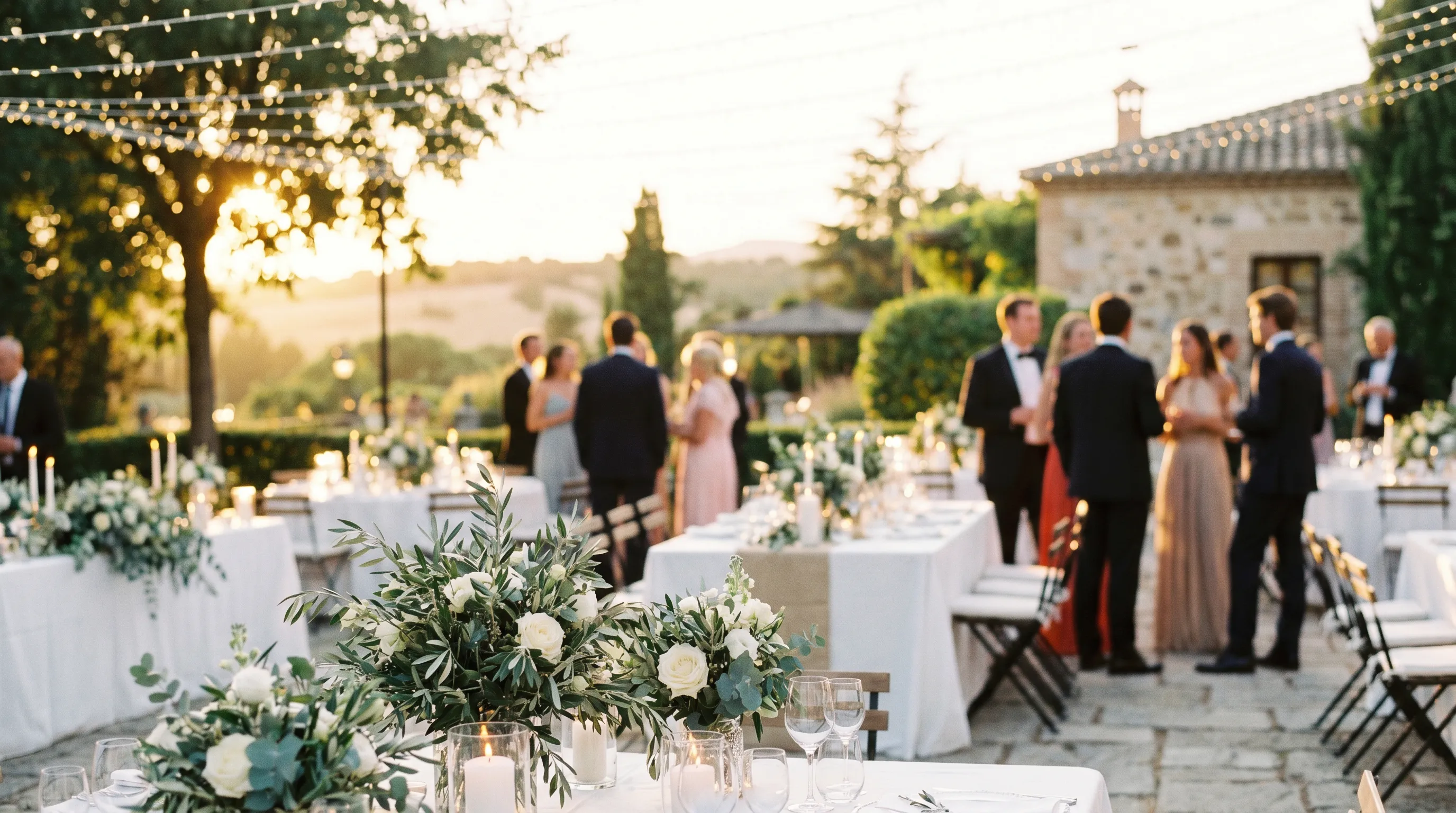
The venues in west Madrid have a fairly recognisable architecture. Wide outdoor spaces for the cocktail or ceremony, indoor rooms with high ceilings, and in many cases gardens that are used at different points of the night. That layout has direct consequences for the sound.
The outdoor space requires specific equipment. A high-ceilinged room of seven metres sounds very different from a marquee, and neither of those sounds anything like an open garden. Working well in these venues means having thought in advance about which equipment goes in each space — not arriving with the same system for everything.
There is also the question of coordinating with the venue itself. High-end fincas of this kind typically have very tight timings between catering service, room changeovers and transitions between moments of the night. That is not a problem if you have coordinated with the venue manager in advance. It is a problem when someone arrives without having had that conversation.
The logistics of the western corridor have their own particularities too. Access to many of these venues requires planning the setup well ahead of time. Nothing dramatic, but it is part of the work that cannot be overlooked.
How the session is built for a wedding in this setting
The musical session for a wedding in west Madrid follows the same logic as any other carefully worked wedding: four moments, each with its own different criteria. But the guest profile adds some specific considerations.
The cocktail at venues in this area is often long — frequently two hours or more. The guests are already at ease with each other, circulating with a drink in hand and not expecting the music to distract them. The register needs to be sophisticated without being precious. Nu-jazz, contemporary bossa nova, instrumental soul, some well-measured funk. Music that is present, that adds something, that does not interrupt. What does not work here is starting to build energy from the cocktail onwards: the guests pick up on it as a failure to read the moment.
Dinner at these events tends to be long and interspersed with set pieces: speeches, toasts, the occasional special moment from the couple. The DJ has to be attentive throughout — adjusting volume in real time, knowing when to drop to zero for a microphone and when to bring the atmosphere back afterwards. This is not a moment for musical prominence: it is a moment of service.
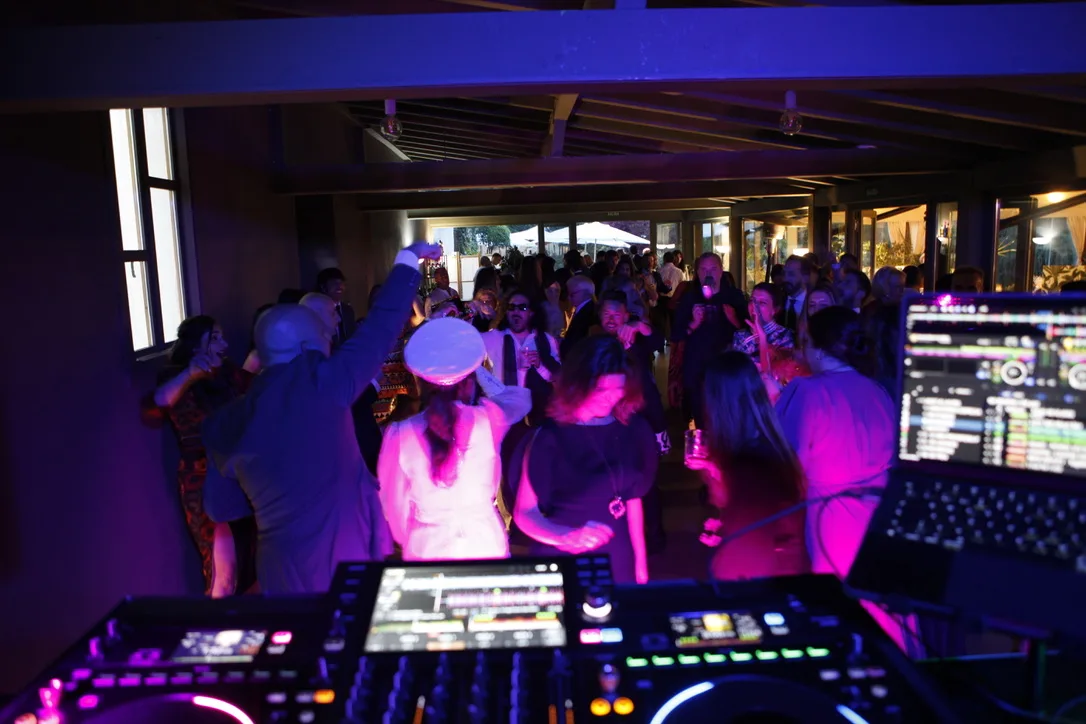
The transition to dancing is the most technical moment of the night. A room full of guests who have just spent two hours eating does not start dancing all at once. The transition has to be gradual: the genres rotate toward something more rhythmic, the level rises quietly, and within ten or fifteen minutes the floor fills on its own. Forcing that moment always delays it.
The party at west Madrid weddings works well when it has an arc. A more accessible first hour, with recognisable classics and genres that do not ask too much of the guest, and a progressive development that adds criteria as the night advances and only those who want to keep going are left. It is not a formula — it is reading the room, which requires standing at the decks and not running a list.
What a wedding at this level needs from the DJ
The kind of couple that organises a wedding in Madrid’s western corridor usually has two things clear: what they want, and what they do not want under any circumstances. That makes the preparation much easier. The prior conversation is more specific, the references are more concrete, and the work of building the session starts from better material.
What these couples value most, in my experience, is not the volume of songs but the coherence of the night. The cocktail, dinner and party sounding like one well-constructed thing, not three independent blocks stuck together. A musical identity that has personality without being forced. A night that flows.
For a couple who fits that way of working, the result is a wedding where the music is present without anyone ever having to think about it. Which is exactly how it should be.
If you are planning a wedding in Pozuelo, Majadahonda, Las Rozas or anywhere else in the western corridor, you can see how I work at DJ for weddings. And if you want to talk before committing to anything, that is also an option.
Frequently asked questions
Do you work at venues in Pozuelo, Majadahonda and Las Rozas?
Yes. The western corridor of Madrid is one of the areas where I work regularly. Fincas, haciendas and private spaces in Pozuelo de Alarcón, Majadahonda, Las Rozas, Boadilla del Monte and Aravaca are all within my usual service area for weddings.
Does a wedding at a venue with both outdoor and indoor spaces need special equipment?
In most cases, yes. Outdoor spaces and high-ceilinged rooms have different sound requirements. What works in a garden is not the same as what works in an enclosed room. Before every wedding at this type of venue, I review the floor plan and define the equipment for each moment of the night.
Can you cover the music for the whole wedding, including the ceremony and cocktail?
Yes. Covering the complete session, from the ceremony through to the close of the party, is how I work at weddings. Each moment has its own criteria, and it makes sense for the same person to coordinate all of them so that the night has coherence.
What does the preparation process look like for a wedding in west Madrid?
It starts with a conversation about your wedding: the space, the guest profile, what you want to feel that night and what you do not want to hear under any circumstances. From there I build the session. For weddings at venues with multiple spaces, I also coordinate in advance with the venue manager to align timings and setup logistics.
Is there a difference between working a wedding in west Madrid and in the city centre?
Yes, though it is more logistical than musical. The venues in the western corridor have larger spaces, outdoor areas are standard, and the coordination timings with catering and the venue are very tight. The musical criteria are the same, but the technical and logistical preparation requires more detail.