A brand activation is not a gala. It is not a product presentation in front of press and distributors. It is not a sales convention. It is something else, and it is worked on differently.
At a brand activation in Madrid — a multi-day pop-up, a brand experience in an adapted space, a consumer event outdoors or in a temporary venue — the audience is not there to listen to a talk. They are there to live something. And music is part of that something, not the backdrop against which it happens. That changes everything.
I have played at activations, pop-ups and experiential brand events in Madrid. What I share here is not theory: it is what works and what does not in that specific format.
What makes a brand activation different
In most corporate events, music plays a supporting role. It accompanies dinner, sustains networking, bridges between segments of the programme. Important, but secondary to the event’s content.
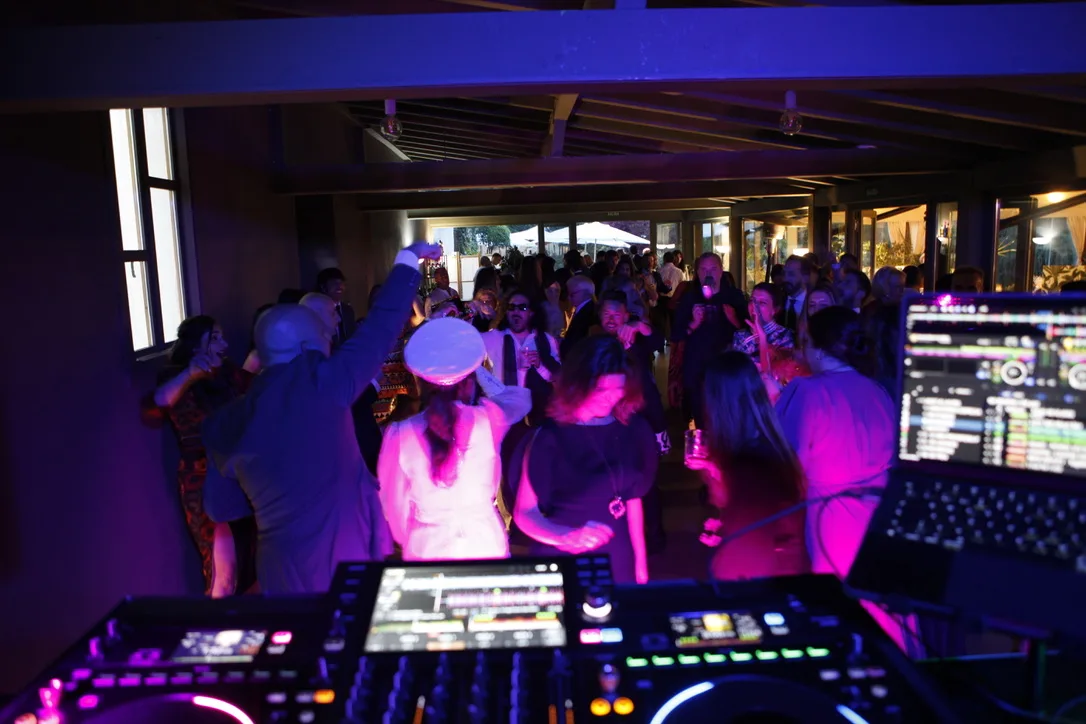
In a brand activation, the event itself is the content. There are no speakers, no formal presentations. The experience the attendee has — what they touch, what they see, what they hear — is the brand’s message. Music stops being a support and becomes part of the product.
That difference has direct consequences for how the session is worked. At a gala, a poor transition is an uncomfortable ten seconds. At an activation, a wrong musical tone can break the entire experience the brand has spent weeks designing. The margin is not the same.
The space as the main variable
Brand activations in Madrid tend to happen in spaces not designed for music. Adapted industrial warehouses, rooftops, temporary premises, galleries, outdoor spaces in high-traffic areas. These are spaces with no designed acoustics, sometimes with significant volume restrictions, and almost always with audience configurations that are nothing like a traditional event.
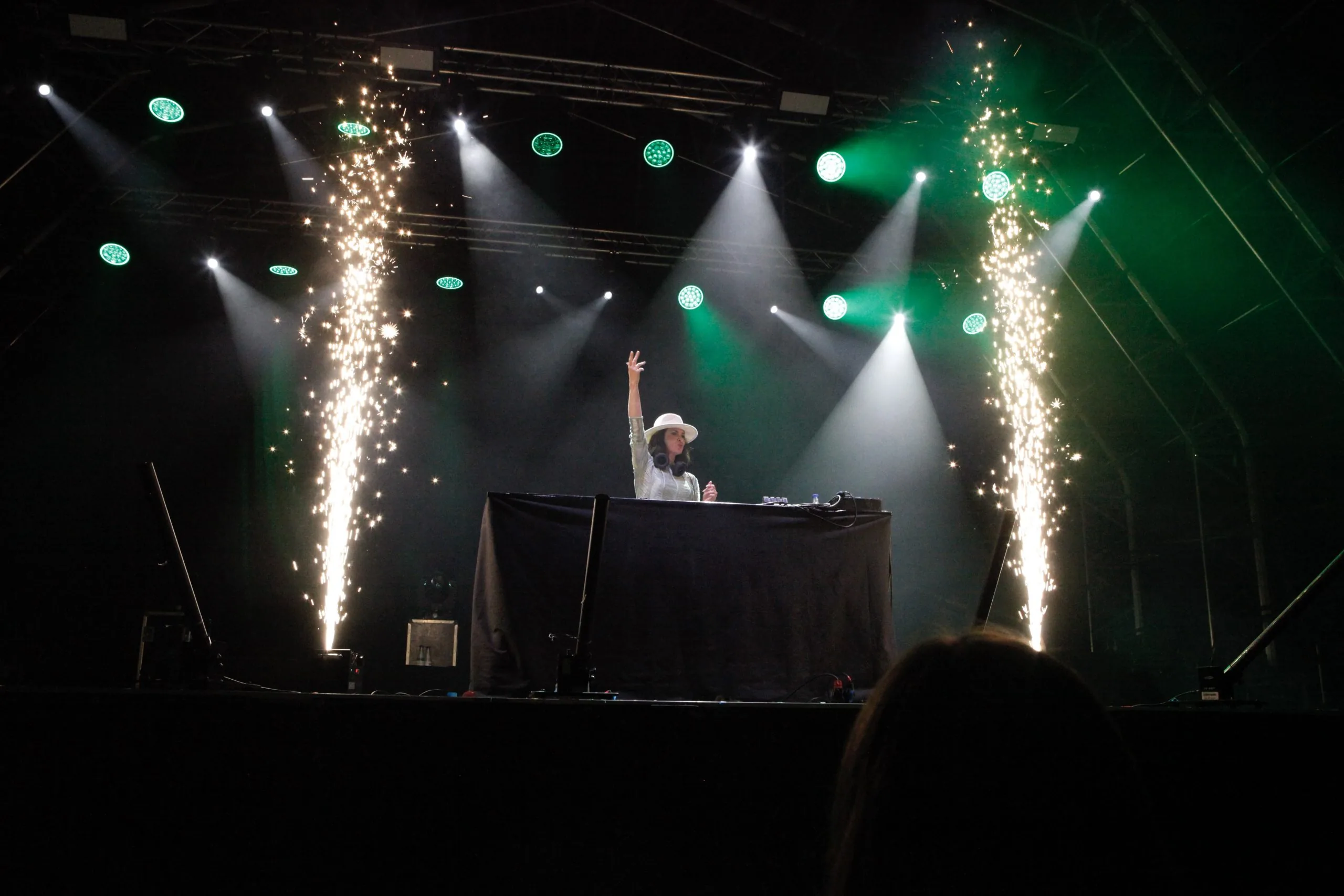
That has technical implications that need to be resolved before the event. At an outdoor space in central Madrid — around a square, on a terrace, in a repurposed courtyard — the music has to coexist with the ambient noise of the city and with the volume restrictions imposed by the space or the local authority. That is not a problem if it is planned for. It is a problem if it is discovered on the day.
In non-conventional indoor spaces, undesigned reverberation can turn a perfectly calibrated session into something that sounds saturated at moderate volume. Knowing how to work within those constraints without the audience perceiving them as a limitation is part of the job.
The brand’s sonic identity is not negotiable
At a wedding, the musical criteria come from the couple. At a standard corporate event, the client provides broad guidelines and there is room for interpretation. At a brand activation, there is something more structured: there is a brand identity, a communication tone, and usually a marketing team or agency with an experience brief that defines how someone walking into that space should feel.
My work at an activation starts with understanding that brief. Not “what genres do you want?” but “what do you want someone to feel when they walk in here?” and “what is your brand image and how does that translate into sound?” These are different questions and they give very different answers.
Each brand calls for a different sonic territory depending on its audience, its positioning and the tone of the experience it wants to create. The music has to be coherent with the brand’s visual and communication universe. If it is not — even if it sounds good in the abstract — something is off, and the attendee senses it even if they cannot say why.
Managing audience flow in multi-day activations
Activations that run for more than one day have a characteristic that single-night events do not: the audience flow is continuous and variable. There are high-traffic moments and moments when the space is almost empty. The music has to work well at both extremes.
In a full space, the session can afford more energy, more sonic presence, more prominence. In a half-empty space, a high-energy session sounds strange and creates a dissonance between what the attendee hears and what they see around them. A good DJ manages that variation in real time, raising and lowering the intensity of the session according to the actual state of the space — without the audience perceiving that management as inconsistency.
That is what distinguishes a session designed for this format from a playlist on automatic: the ability to react to what is happening in the space at each moment.
Coordination with the agency and production team
At brand activations, the DJ rarely works directly with the end client. There is an event or experience agency in between, and a production team managing the space, timings and logistics. That chain of coordination has to work well.
What I need from the production team before an activation: the floor plan of the space with the DJ position marked and information on what sound system is available or needs to be brought in; the event timeline with the key moments that require a specific musical cue; and a production contact to speak with during the event for the last-minute changes that always happen.
What the production team can expect from me: arriving with enough time for setup, the system tested and running before the first attendee arrives, and no technical surprises that need to be escalated.
Madrid as an activations market
Madrid concentrates a significant number of brand activations, particularly in areas such as Malasaña, Chueca, the Barrio de las Letras and the Serrano axis. There is also an important circuit of temporary spaces in the north of the city, around IFEMA and at outdoor locations during the warmer months.
I have worked across very different formats within that landscape. What does not change is the criteria for working the session: the music has to be coherent with the brand, function in the specific space, and adapt to the real flow of the event. A playlist does not do that.
If you are organising a brand activation or an experiential event in Madrid and the music side is still undefined, now is the time to talk. You can see the full service at corporate events or write to me directly from the contact form.
Frequently asked questions
What is the difference between a brand activation and a product launch?
At a product launch, the event has a structured programme: there is an audience listening to something, there are formal moments, and there is usually a networking segment afterwards. At an activation, there is no programme to follow: the attendee experiences things freely, at their own pace. The music has to work without relying on the audience being in a state of directed attention. The format is closer to a high-end retail environment than to an event with speakers.
Do you work with event agencies as well as direct clients?
Yes. It is the most common arrangement for activations and experiential events. I work directly with the agency team and with production, and the level of coordination is the same as if it were a direct client relationship. For the event to go well, I need access to the experience brief and a fluid line of communication with production.
Can you cover multi-day activations?
Yes. For multi-day activations, managing the repetition factor matters: if there are attendees who return more than once, they need to perceive variation in the session even if the general framework stays the same. That requires advance planning, not improvisation.
What if the space has very strict sound level restrictions?
That is common at outdoor locations in Madrid, particularly in residential areas or spaces with municipal noise ordinances. I work within those restrictions: musically interesting results are achievable at moderate levels if the system is designed correctly for the space and the session is calibrated for that context. What I do not do is promise that the level will exceed what the space allows.
Do you bring your own equipment or use the venue’s system?
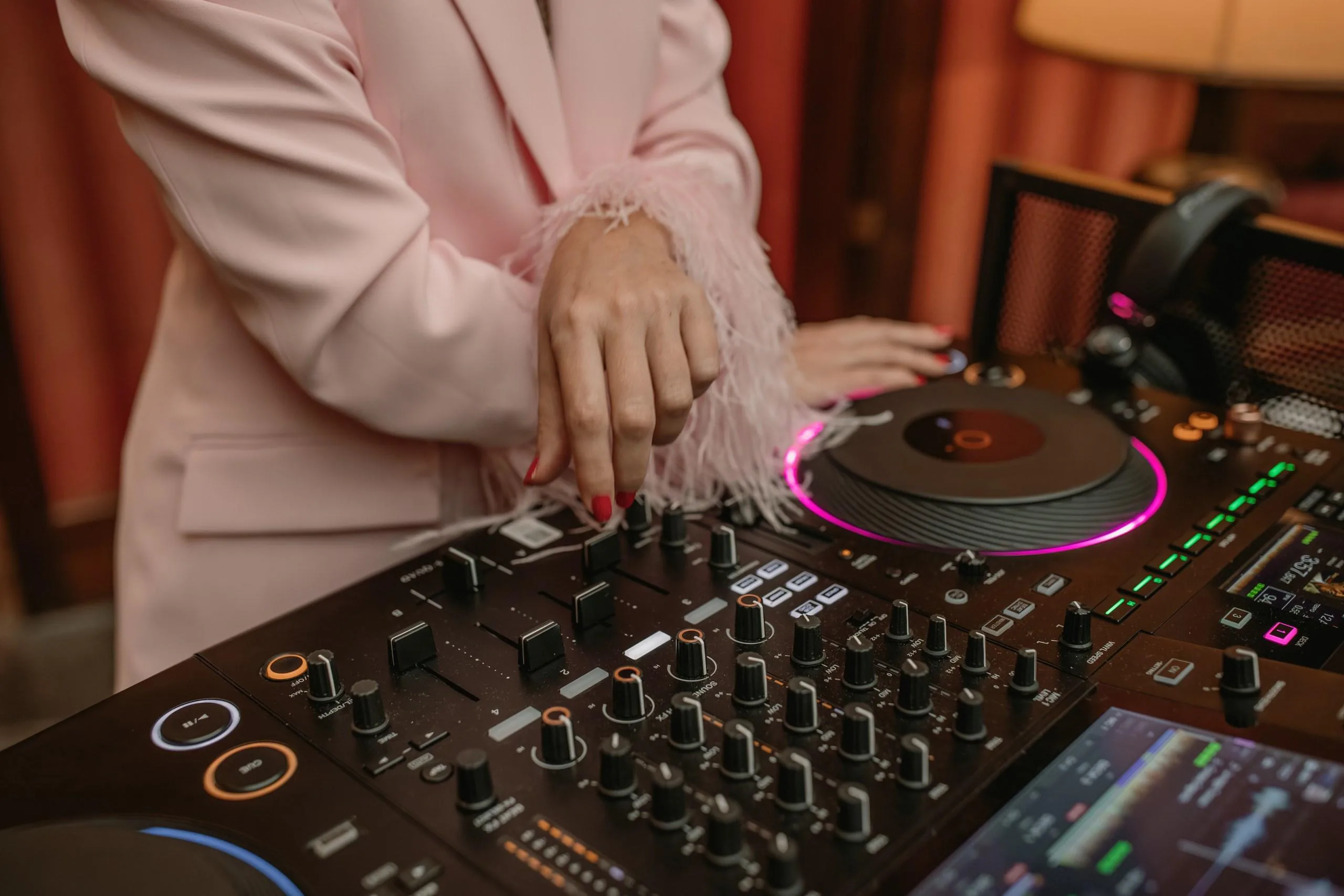
It depends on the space and the type of activation. For spaces without their own installation, I bring a complete setup. For spaces with a fixed system, I can integrate into it if it meets the minimum technical requirements for the type of session the event calls for. In all cases, the mixing equipment is mine and I do not depend on the venue’s system for musical decisions.